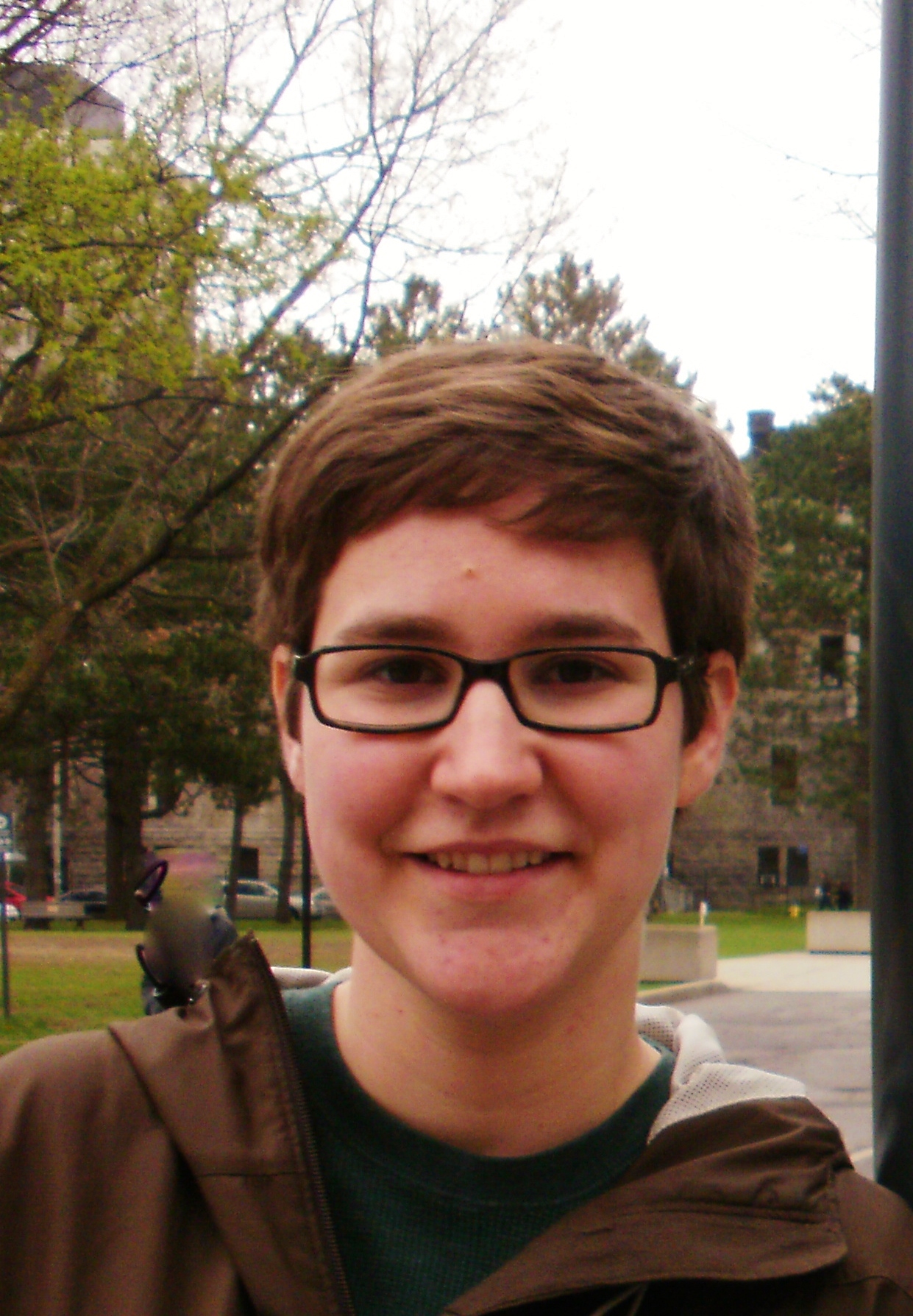
Christina Parsons, Logistics Coordinator

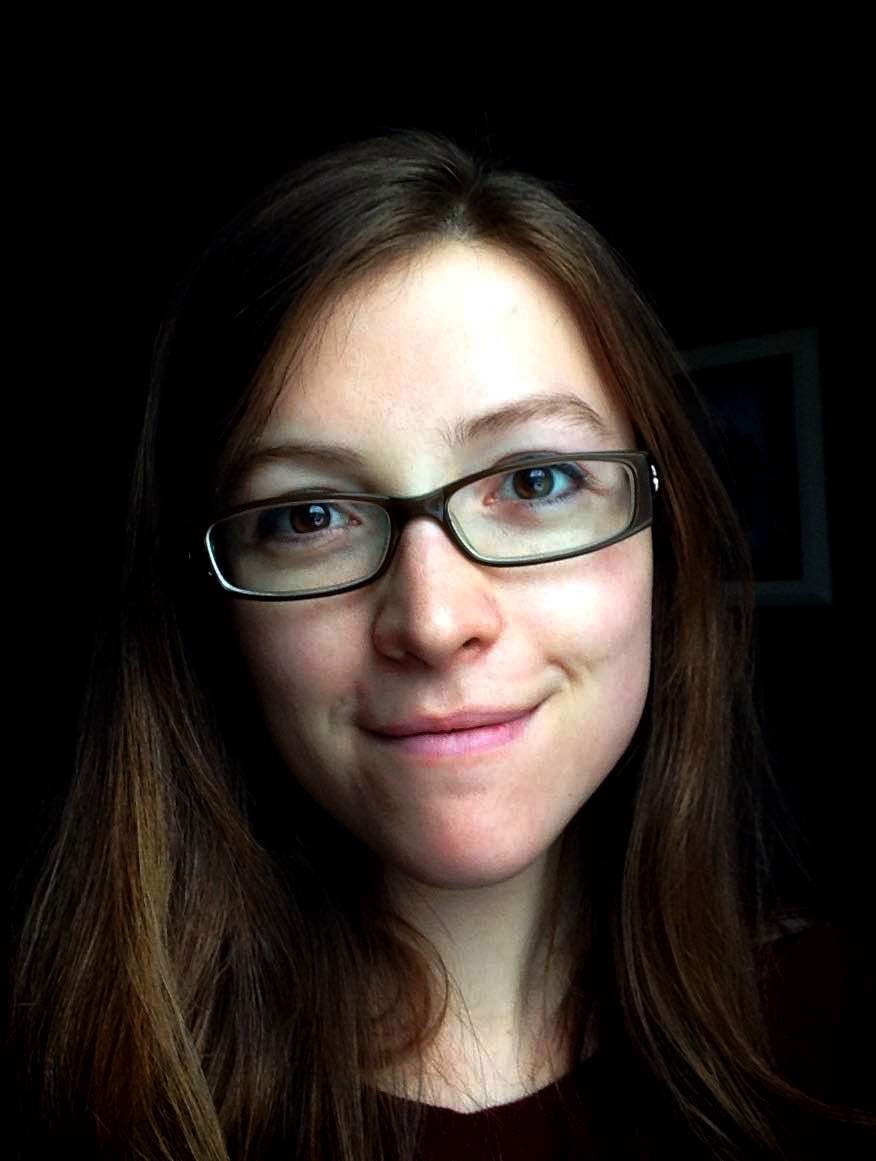
OLYMPUS DIGITAL CAMERAChristina completed an M.A in History in 2013 from Carleton University and is currently completing an M.I.S. degree at the University of Ottawa.  As a firm believer in the power of storytelling and showcasing histories, she is thrilled to return to volunteer for the second year of Staging Our Histories, this time as the “behind the
scenes coordinator”!.

Meet Our Volunteers: Matthew Moore

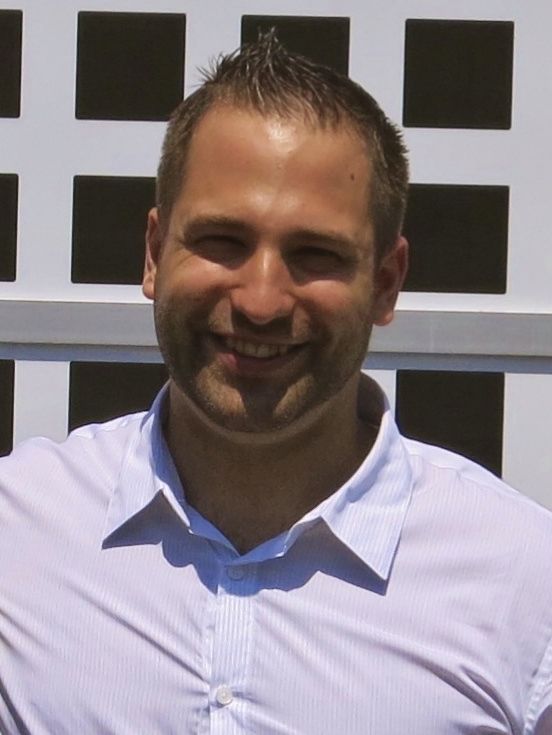
 IMG_0460My passion for history has always stemmed from a desire to tell, hear, and share stories. For me, history has always been about telling a story as much as it has been about recording events and getting the facts straight. As a graduate student studying history, and more specifically the postwar story of Canada’s Second World War Merchant Navy, I have had the privilege of critically engaging with the past in both an academic and professional setting. Work at the Canadian War Museum, Historica Canada, and at Carleton University have all helped me better understand the complexity of doing history in public and academic spheres.

As a historian I have often found myself contemplating the limits of historical discourse; the practical constraints that conventional history has brought to bear on the transference of what can conservatively be called a narrated record of human existence. As I undertook my own performative project as part of my studies at Carleton University I came to appreciate the challenges and rewards that performance based history presents. During my performance I managed to converse with the past on stage in front of an audience, and as a result, was pushed to consider the ‘facts’ I was presenting as well as my mode of delivery as a historian from a fresh perspective, one that added richness and complexity to the story I told.

I believe that historical performance enables us to connect with the past in interesting ways. It allows us to get at issues that are difficult to convey using text alone and permits critical engagement with sources and methods that often get overlooked in more conventional forms of history. Staging Our Histories offers a unique platform for historians, artists and performers to share, hear, and discover new stories about the past. It is my belief that the collaborative nature of the event will enable a richer understanding of the past, one meant to be inclusive, insightful, and innovative.

DEADLINE EXTENSION! Submissions now due: Jan. 21st

GOOD NEWS for dancers, poets, musicians, film makers and history students just returning from holidays: we’ve extended our submission deadline to better accommodate your detailed proposals.

Your submissions will now be accepted until January 21st, 2015! If you haven’t already started your written or recorded proposal that outlines how you would perform history off the page and on the stage, now is the time to get the ball rolling. More detailed information on what we are looking for in proposals is available here.

Prospective performers that submit early are welcome to seek more detailed feedback and guidance from our co-directors. We’d love to hear from you!

Meet Our Volunteers: Kathryn Boschmann

BoschmannI decided to purse History because of a long standing love for stories about the past, but I never thought my fondness for chatting with people about their lives would turn into a degree. Questions of how we remember, what stories we choose to tell, and how those stories shape our sense of self and the world around us have always fascinated me. I have chosen to explore these interests of mine through oral history.

My research centers on post-World War II Irish Canadian immigrants living in Winnipeg, Manitoba, drawing primarily on oral history interviews. In other words, a major part of my research is drinking tea with lovely people and chatting about their lives and thoughts. My thesis will examine the experience of migration and various ways this group has sought to “be Irish” within the context of a Prairie city (and my home town).  I am particularly interested in relationships to space and landscape, as well as the ways in which people connect with and process the past. I also want to explore performance and the doors it opens for us to express emotional ties and transfer knowledge about our sense of history.

Each chapter of my thesis will be accompanied by an online exhibit in order to keep the aurality in oral history and to make my research easily accessible to the public. This will also provide me with the opportunity to be creative in how I present my interviewees’ stories and to build upon the storytelling skills I have learnt in my graduate studies. I am very excited to be working with Staging Our Histories and am looking forward to seeing the performances the participants create for this event!

ANNOUNCEMENT: Adrian Harewood Hosting Staging Our Histories

The Staging Our Histories team is very excited to announce that prominent local journalist and broadcaster Adrian Harewood will join us as our moderator and host on May 31st, 2015. Mr. Harewood will facilitate short talk-back sessions between the audience and performers that encourage contemplation and active discussion regarding the themes and questions raised on stage during the evening.

Audience members and performers are invited to a reception after the event to informally continue the discussion!

If you want to share our stage, submit your performance proposal by January 9th, 2015. Storytellers, dancers, musicians, playwrights, filmmakers, and poets are all encouraged to submit. We are looking for diversity in both subject matter and performance styles, and pieces that will catalyze a greater understanding of how we remember, forget, and tell stories to make history. Get all the details and the proposal guidelines here.

If you are more interested in securing a spot in our audience, more information will be coming in the new year regarding tickets!

The co-directors of Staging Our Histories would like to thank Adrian Harewood for joining us for our first year, and for continuing to be an advocate and supporter of social conscience and culture in the Ottawa community.

A Chat with our Co-Directors Part II: An Awesome, Mind Blowing, Intellectually Stimulating Show

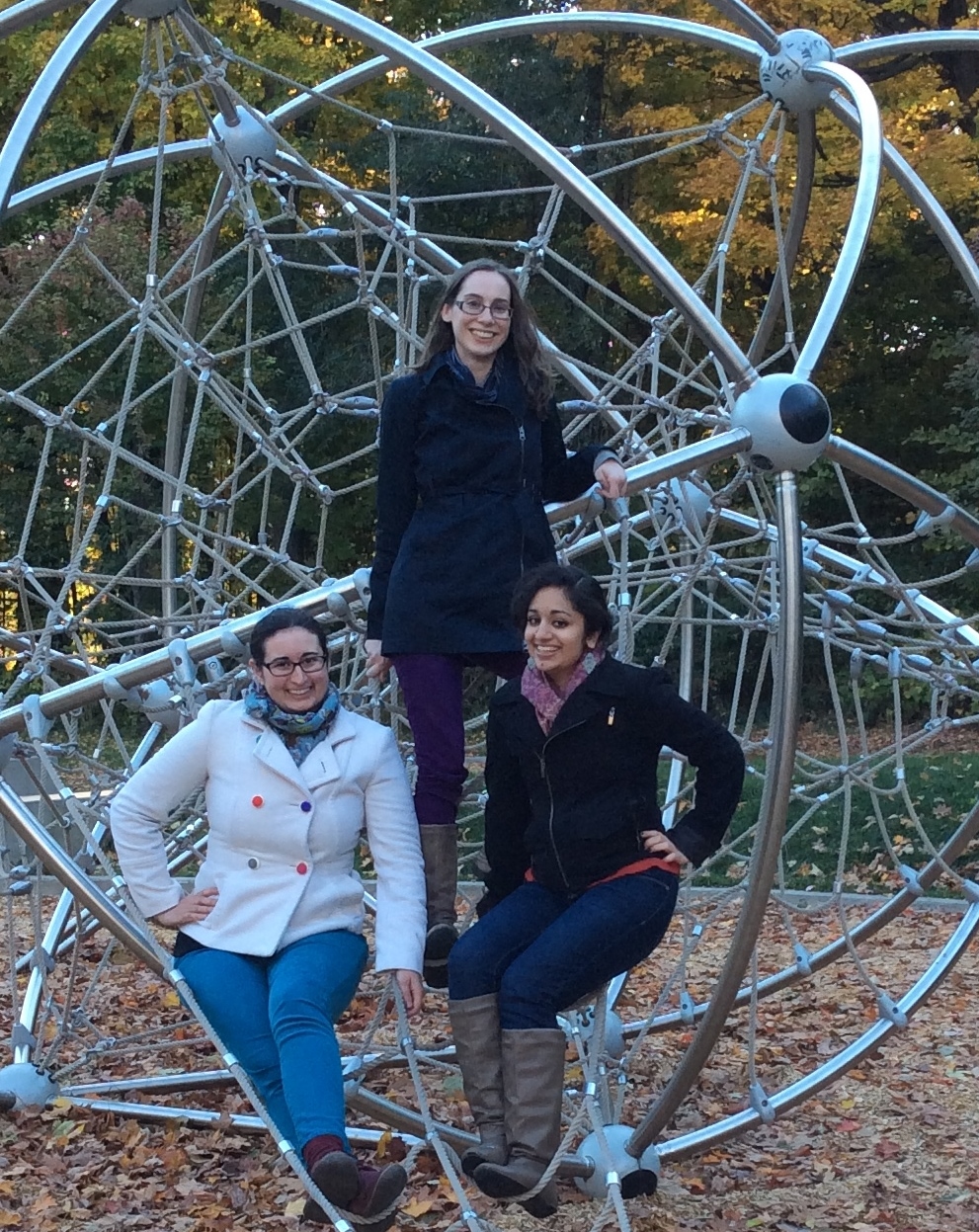
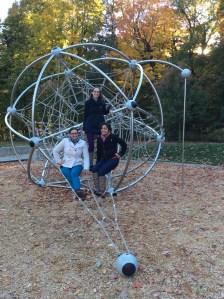
IMG_3180On Nov. 29th, the three co-directors of Staging Our Histories (Arpita Bajpeyi, Sinead Cox and Marie-Anne Gagnon) met with colleague Christina Parsons via the magic of the internet to talk about the concept and their expectations of the event. You can catch up with Part I  of the the discussion here.

Christina Parsons: Do you feel that you may encounter some contention between people who have experienced certain histories differently?

Marie-Anne Gagnon: There are so many pages of history to choose from that it would be a big coincidence. But if so, I don’t think that would be a problem, but rather a great opportunity for exchange and fostering understanding.

Arpita Bajpeyi: Absolutely! Part of the event will be opening up the floor so that the audience and performers can have those conversations in a positive, constructive space. But I think the very nature of the performance implies each history will be a personal interpretation.

Sinead Cox: There will be the talk-backs. And as much as performance can be very cathartic and personal for a performer when they’re talking about history, I think an audience can also have a very visceral reaction, positive or negative. The day we had our performances [at Carleton], I remember it being very draining: they were incredible, but it was emotional. I think performance is great for engaging you intellectually and also getting you right in the gut.

Marie-Anne: We have left the theme very open-ended so that people can bring forward whatever project they would like. In future years (if we are lucky enough to make this happen again!) it could be interesting to narrow the subject to see different interpretations of the same topic

Christina: Very true, it would be great to see many facets of the same topic.

Marie-Anne: As Sinead was saying, in our experience, people chose very personal topics, that had to do with their own history or that of their family.I guess we wanted to see that happen again. Because it was so powerful.

Arpita: Those are the stories that were the most powerful.

Sinead: It’s interesting how commonalities pop up even when the topic is broad. I think patterns emerge. Like grandparents.

Marie-Anne: Did you know genealogy is the most researched thing at LAC? Just proves that people care about where they personally come from. Henry VIII can seem rather far.

Christina: Being able to share personal stories on a larger scale can be very affirming to someone who does not usually have that platform.

Sinead: Yes! And I think as much as [submissions] can be about a personal history, they can also be about NOT having that history. Of being divorced or alienated from your history, or conflicted about it.

Arpita: And that is something we’re hoping to provide, for sure. A space for histories that are typically overlooked or ignored because of the way that they are told, or because of who is telling them. And those can be incredibly powerful pieces too.

Marie-Anne: But I suspect we might also see performances about parts of history that interest the participants, even if they are not directly connected.

Sinead: What speaks to people isn’t always directly close, for sure. Maybe someone feels very connected to and passionate about Henry VIII! As long as they’re telling that story in a new way, we’d be interested.

Marie-Anne: Most historians study not their own culture. Part of being a historian is having a curiosity for what you don’t personally know.

Christina: Are you making an effort to include indigenous or counter-colonial narratives?

Arpita: I think the three of us definitely gravitate towards those kinds of narratives, for various reasons. I’d be surprised if none of them appear in the program!

Marie-Anne: Indeed.

Sinead: I hope so. Attention all of you with counter-colonial narratives: please submit!

Arpita: That’s part of the fun of this experiment. Seeing what comes our way.

Christina: What mediums are available? For instance, will you have audio/visual equipment?

Arpita: We will provide most equipment, unless it’s highly specialized.

Sinead: That’s a good question! We’re definitely interested in film and multimedia. So we will try to accommodate the proposals we accept within the limits of the venue.

Marie-Anne: We should probably mention how long the performances should be, and how long the evening will be.

Arpita: The evening will begin at 7:30, and performances and talk-backs will run until 9:30, after which there will be a reception. Performances should run between 5-20 minutes.

Christina: Also, for posterity, what day is it?

Arpita: Sunday May 31.

Marie-Anne: If you’re coming to Ottawa for the CHA AGM, please drop by! [It will be] an awesome, mind blowing, intellectually stimulating show. (You don’t need to include that. Just a fact.)

Sinead: It may need to be the title!

Keep an eye out for exciting news and updates about Staging Our Histories in  the days to come, including the official announcement of our venue! Many thank yous to Christina Parsons for her time, and for her thoughtful questions as our moderator. You can hear much more from Christina in her upcoming podcast, H is for History and read her work at History Watch.

You’ve read how the co-directors envision the outcome of Staging Our Histories, but the reality will be up to you, and the challenging, surprising and powerful work you submit by January 9th! Read more about the submission guidelines here.

If you have any queries for Arpita, Marie-Anne or Sinead before you submit, email us at StagingHistories@gmail.com.
A Chat with our Co-Directors Part I: Where ‘Staging’ Started

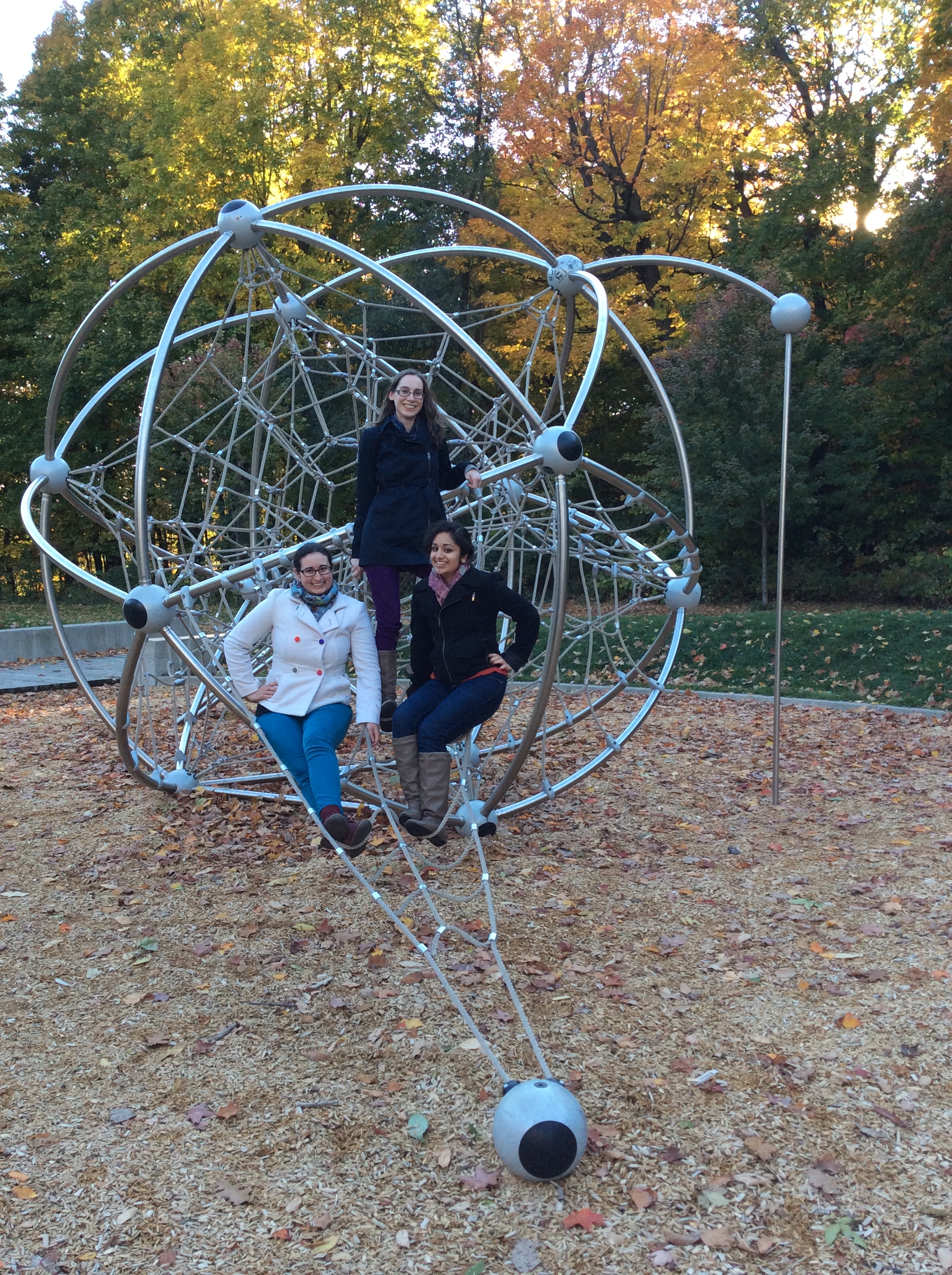
IMG_3180On Nov. 29th, the three co-directors of Staging Our Histories (Arpita Bajpeyi from Ottawa, Sinead Cox from Goderich Township, in rural Southwestern Ontario and Marie-Anne Gagnon of Montreal) met with colleague Christina Parsons via the magic of the internet to talk about the origins and concept of the event. Find Part II here.

Christina Parsons: So welcome, why don’t we start off with personal intros and an introduction [to Staging Our Histories].

Arpita Bajpeyi: Sure! We’re all graduates of the Carleton University Public History program.

Marie-Anne Gagnon: I am a public historian from Montreal. During my Master’s at Carleton, I had the pleasure of studying with Arpita and Sinead. We all participated in a Performance and Narrativity seminar in the Department of History [with David Dean], which is where little mind wheels started turning.

Sinead Cox: After graduation we were trained and excited to actually do history in public in inclusive and innovative ways. But we weren’t finding opportunities to necessarily do so right off the bat. Maybe Arpita wants to describe the exact moment Staging our Histories came into being.

Arpita: I think the exact moment for me was after a summer of volunteering for some really great organizations, and enjoying it immensely, but also missing Public History, and the things that used to interest and inspire me daily.The performances from David [Dean]’s class had stuck with all of us I think, and I remember walking out of his class wanting more of that experience, and being able to share it. So I got in touch with Sinead and Marie-Anne to see if they would be interested in taking on this project, to do just that.

Sinead: [Carleton] was a great environment for us, to both interact with wider theories and the current practice of public history, and to pursue histories that were very personal to us, that we were passionate about. And although we met in the same program, we had very different historical interests.

Marie-Anne: Public History has for many years been a way to push history outside of academia, by working more directly with museums and heritage organisations. But even outside of university walls, public history can be relatively conservative, sticking to the written word and physical objects. That’s why some historians are turning to performance as a new and exciting way to explore history

Arpita: And that’s why performance is such an amazing way to push those boundaries.

Marie-Anne: By partnering with storytellers, dancers, musicians, we can find more embodied, present, and emotional ways of experiencing our histories

Why Perform History?

Christina: Theories of performance in history are pretty cutting edge. Is breaking that wall with the public very new in the realm of history?

Marie-Anne: I think the public is accustomed to a certain way of interacting with history – mostly through museums.

Arpita: That isn’t to say that historians (however you want to classify them – academically trained or otherwise) haven’t been experimenting and challenging their various audiences for some time now.

Marie-Anne: Of course film and living history sites perform history for the public, but not in the same way as stage arts do.They can be great ways to spark an interest in history for audiences that are hard to reach by more traditional means. They often try to pair entertainment with educational material. But I don’t think that’s what we’re trying to do

Sinead: [Performance] is a way that history is already being shared, and has always been shared. So we’re not reinventing the wheel in any way, but we want to look at those methods seriously, and reflectively, and see how the storytelling avenue itself impacts the history. I don’t think it’s a new way to tell history, but I think understanding performance as history in the same way you understand a written source as authoritative is maybe still not the norm?

Arpita: Yeah, bang on there, Sinead. I think that’s something that’s really important to us here, is re-examining ‘traditional’ methods of sharing history and taking them as seriously as ‘modern’ ones.

Sinead: The interactive element of performance, what an audience brings in real time, is also something that I think can’t be underestimated.

Christina: Those are all really great points. I also really like the intersectionality that you are very consciously pursuing.

Marie-Anne: I think it might be worth adding that we’re not looking for performances that present history as fact. We welcome creativity, as the past can hold many truths, not all of them the cold hard facts of traditional historiography

Sinead: The idea for the event also comes from as a grad student reading a lot about performance and history, and it’s maybe more productive to just, well put on a show and do it. Which we got a taste of in David’s class; we all had to do a performance. Arpita danced. Marie-Anne sang. I had a little theatre piece. And we want to do that on a larger scale, with a mixed audience of academics, the arts community and the general public, and explore, as you said Christina, the intersectionality!

Arpita: Quite! I think we’re also looking for self-reflexivity, and an understanding that each story comes with its own baggage that needs to be understood and acknowledged.

Sinead: Good point! We’re really focusing on performances that explore history, and history telling, and are self-reflexive, rather than a straightforward interpretation, if such a thing exists.

The Honesty of Performance

Christina: Does performance allow for more self-reflexivity and truths than other mediums?

Marie-Anne: Performance allows the performers to explore their own personal baggage about certain events that touch them in some way, and to show to their audience how they are aware of their own biases.

Arpita: In some ways, I think it does allow for more self-reflexivity – though some mediums more than others. Film might more easily avoid it than, say, a poem.

Marie-Anne: Bias is usually regarded as something bad, to be avoided, or camouflaged. But in performance, history tellers can embrace their biases and show how history matters to them.

Arpita: There is definitely something very intimate and personal about a performance, and this will be emphasized by the nature of our venue too!

Sinead: I think with performance, just the connotation of that word, there’s more acknowledgement of artifice, of storytelling, than in written sources which are often taken as authoritative and reliable, and authentic, which is of course not always the case. So I think there’s perhaps an honesty or an understanding  that there is art involved, a particular perspective. So I don’t know if it’s more truthful, but I think it is inherently reflexive.

Arpita: Yeah, I really like that. An inherent honesty.

Christina: Does that lead to more personal histories intertwining with larger narratives?

Marie-Anne: I am hoping we might get some performers who intertwine oral history and performance. Oral history is very big in academia at present. I think people are realising more and more that personal stories matter.

Continue to Part 2

To follow the rest of the discussion, and learn more about what Arpita, Marie-Anne and Sinead envision as the outcome of  Staging Our Histories and its successful submissions, look for Part II on Monday, December 1st. Many thank yous to Christina Parsons for her time, and for her thoughtful questions as our moderator. You can hear much more from Christina in her upcoming podcast, H is for History, and read her work at History Watch.

You’ve read how the co-directors imagine Staging Our Histories, but the reality will be up to you, and the challenging, surprising and powerful work you submit by January 9th! Read more about the submission guidelines here.

If you have any queries for Arpita, Marie-Anne or Sinead before you submit, email us at StagingHistories@gmail.com.

NEW: January 9th Deadline to Submit to Staging Our Histories

Do you do history off the page? Do you want to share untold narratives on the stage? We’re looking for dancers, storytellers, musicians, comedians, filmmakers,  playwrights, actors, animators, composers,  puppeteers, students, historians, poets and maybe YOU! 

SUBMIT YOUR PERFORMANCE BY JANUARY 9th, 2015! Until that date, we are happy to accept informal descriptions of your concept for feedback.

Staging Our Histories will select  5 – 10 diverse original performances to be part of our inaugural event in Ottawa (taking place the last week in May/first week of June, 2015). Both individuals and groups/troupes are welcome to submit.

Performances must

  • present original work (script, choreography, etc.) created by the individual or group submitting
  • centre around the themes of history, memory, and/or doing history
  • run 5 to 20 minutes**

**If your performance is better served by a shorter or longer running time, please indicate this in your proposal. Performers are welcome to present an excerpt or selection from a larger work.

Professional and amateur performers are welcome to submit video auditions or written proposals. Performers are encouraged to be reflexive and critically aware of the narratives they create, or to focus on the process of narrating histories itself.

Proposals can be in writing (max 1.5 pages) or video/audio (5 mins max). In your proposal, please outline the subject matter and logistics of your idea, your performance style of choice, the estimated length of your piece and the equipment/support you would require. To help us make our selections, please also attach your piece (poem, video, script) if possible or a detailed breakdown/description (in the case of choreography etc. if not filmed). Please include the names and contact details of all of your members if you are submitting as a group. 

We understand that our talented performers will likely be practicing, perfecting and reworking their pieces before Spring 2015 and these performances may therefore change and evolve between January and May, but we require a comprehensive idea of what you’ll be bringing to the stage in order to make our selections.

Please send your auditions / proposals to staginghistories@gmail.com by January 9th, 2015.

Have questions? Between now & the January 9th due date, please feel free to contact us with your questions, or to send informal proposals for feedback. & Make sure to follow us on Twitter and Facebook. We look forward to taking your stories to the stage!